
August 29, 2026 · 6 min read
Shot Down Over the Arctic: The History and Restoration of P-40K Warhawk N401WH
Built in 1942, flown in Soviet colors on the Eastern Front, shot down near Murmansk in 1943, and pulled out of the tundra decades later — the remarkable life of Curtiss P-40K Warhawk N401WH, now offered for sale.
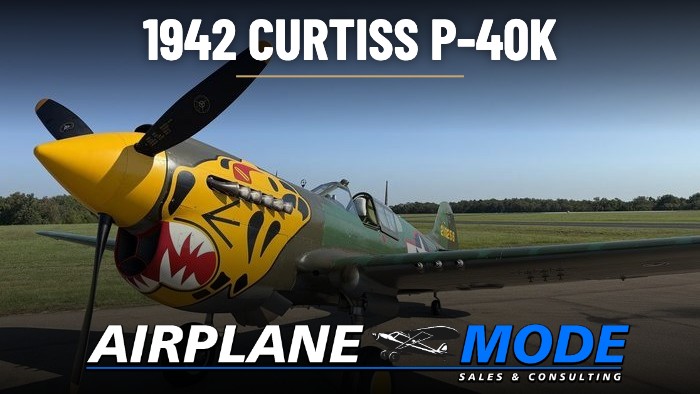
Very few flying warbirds can point to a single, documented combat history. Most are composites — assembled from parts, restored around a data plate, or rebuilt from trainers that never saw a shot fired. The 1942 Curtiss P-40K Warhawk registered N401WH is a rare exception. It was built for war, shipped halfway around the world, flown in anger over the Arctic, brought down in 1943, and left where it fell for the better part of half a century.
Built in Buffalo, Bound for the Eastern Front
The P-40K rolled off the Curtiss-Wright line in Buffalo, New York in 1942, at the height of American wartime production. The K model was the Allison-powered evolution of the Warhawk family: more power from the V-1710-73, a deeper dorsal fin to tame the added torque, and a fighter tough enough to absorb punishment that would have finished more delicate aircraft.
Under the Lend-Lease Act, thousands of American aircraft were delivered to Allied nations, and the Soviet Union was among the largest recipients. This airframe was one of them. Crated, shipped, and reassembled, it was handed over to the Soviet Air Force — the VVS — and repainted in Soviet markings for service in the far north, where the fight for the Murmansk convoy route was some of the hardest flying of the war.
Combat in the Arctic
Soviet pilots flew the P-40 hard. In the Arctic theater it escorted convoys arriving at Murmansk, intercepted German bombers, and flew ground attack missions in weather that grounded better-equipped units. The Warhawk earned a reputation there that it never quite got elsewhere: rugged, forgiving on rough strips, and able to come home badly shot up.
This aircraft did exactly that, until 1943. During a combat sortie it took hits, lost power, and the pilot put it down in the tundra near Murmansk — a force landing rather than a crash, which is precisely why so much of the airframe survived. The aircraft came to rest largely intact, and there it stayed as the war moved on and the ground reclaimed it.
Recovery from the Tundra
Decades later, with access to the Russian north finally possible, recovery teams began locating and lifting wartime wrecks from the tundra and lake beds of the Kola Peninsula. The cold, dry conditions had done what no museum could: preserved airframes with original structure, original data plates, and even original combat damage still visible in the aluminum.
The P-40K was recovered and shipped west as a genuine relic — battered, incomplete, but unmistakably the same machine that had flown from an Arctic strip in 1943. That provenance is the foundation of everything that followed. A restoration is only as historically significant as the airframe it starts with.
Restored by Fagen Fighters
The restoration was carried out by Fagen Fighters, one of the small handful of shops in the world capable of returning a wartime relic to airworthy, museum-grade condition. That work is measured in years, not months: original structure repaired or replicated to drawing, systems rebuilt, the Allison overhauled, and thousands of hours spent on the details that separate a good warbird from a great one.
The result was not a shiny approximation of a P-40 — it was this P-40, correct to its Soviet service period, right down to the markings it wore over Murmansk.
2006 Oshkosh Grand Champion WWII
At EAA AirVenture Oshkosh in 2006, the finished aircraft was judged Grand Champion WWII — the top warbird award at the largest airshow in the world, and the clearest possible verdict on the quality of the work. Judges at that level look past paint and polish to structure, systems, correctness, and documentation. Grand Champion is not an award a restoration wins by being pretty.
The Aircraft Today
N401WH remains one of the most historically significant flying P-40s in the world: a documented combat veteran, recovered from the site of its own 1943 force landing, restored by a shop with nothing left to prove, and validated at the highest level of warbird judging.
Airplane Mode Sales & Consulting is proud to represent this aircraft. Full logbooks, restoration documentation, and inspection history are available to qualified buyers. Call us and we will walk you through it.